
How Workplace Noise Can Lead to Hearing Loss
Hearing loss is a common health concern, and repeated exposure to loud noise is an important cause of preventable hearing damage. While workplace injuries are often associated with accidents, falls, or physical trauma, hearing damage can also be a serious occupational hazard.
Employees who spend long periods working around excessive noise may gradually develop noise-induced hearing loss. Because the damage can occur slowly, workers may not realize their hearing is being affected until the problem becomes noticeable.
How Does Workplace Noise Cause Hearing Loss?
Noise-induced hearing loss can occur when a person is repeatedly exposed to loud sounds over an extended period. Extremely loud sounds can also cause hearing damage after a single exposure.
Prolonged exposure to loud machinery, power tools, engines, construction equipment, and industrial equipment can place significant stress on the delicate structures inside the ear. Over time, repeated exposure may permanently damage the cells responsible for hearing.
Which Industries Have a Higher Risk?
Some occupations involve considerably more noise exposure than others. Workers in industries such as mining, construction, and manufacturing may regularly encounter loud equipment and machinery.
Research has identified hearing loss among workers in several high-noise industries, including approximately:
- 17% of workers in the mining industry
- 16% of workers in the construction industry
- 14% of workers in the manufacturing industry
These figures demonstrate why hearing conservation is an important part of workplace safety in environments where employees are routinely exposed to excessive noise.
Hearing Loss Is Not Just an Age-Related Problem
Hearing loss is often thought of as a condition that primarily affects older adults. However, noise-induced hearing loss can affect people at any age. Regular exposure to loud sounds at work can contribute to hearing damage in younger and middle-aged workers as well.
One of the challenges with noise-related hearing damage is that it can develop gradually. A worker may become accustomed to a noisy environment and fail to recognize that their hearing is changing.
Possible warning signs include difficulty following conversations, frequently asking others to repeat themselves, increasing the volume on a television or phone, or experiencing ringing or buzzing in the ears.
Millions of Workers Are Exposed to Workplace Noise
The Occupational Safety and Health Administration (OSHA) has identified occupational noise exposure as a significant workplace safety concern. Millions of employees are exposed to potentially hazardous noise levels each year.
Employers can help reduce these risks through noise-control measures, workplace safety programs, employee education, and appropriate hearing conservation programs. Workers also have an important role in using the protective equipment and following the safety procedures provided by their employers.
How Can You Protect Your Hearing at Work?
If your job requires you to spend time in a noisy environment, there are several steps you can take to help protect your hearing.
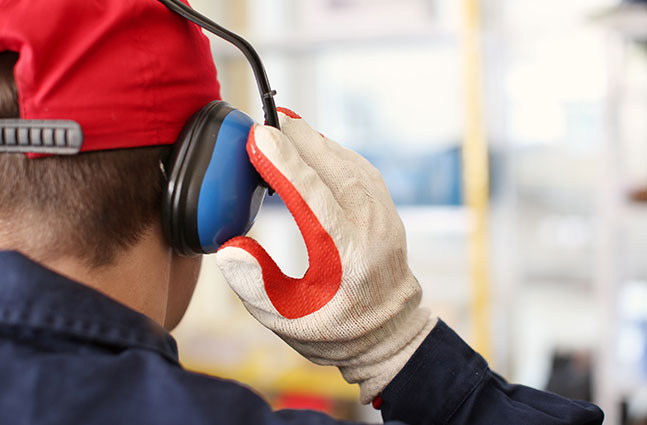
- Wear hearing protection: Use properly fitted earplugs or earmuffs when required or recommended for your work environment.
- Follow workplace safety procedures: Follow your employer's hearing conservation program and any instructions regarding noise exposure and protective equipment.
- Reduce your exposure: Whenever possible, limit the amount of time you spend in excessively noisy areas.
- Keep your distance from loud equipment: Increasing the distance between yourself and a noise source can help reduce your exposure.
- Pay attention to noise levels: Smartphone sound-level applications can provide a general indication of how loud an environment is, although workplace noise assessments should be performed using appropriate professional equipment when necessary.
- Have your hearing tested: Regular hearing evaluations can help identify changes in hearing and establish whether additional protection or follow-up may be needed.
Why Hearing Protection Matters
Unlike many minor workplace injuries, noise-related hearing damage can be permanent. Once significant damage has occurred, it cannot simply be reversed with medication or compensation.
That is why prevention is so important. Wearing hearing protection consistently and following workplace safety recommendations can help reduce the risk associated with repeated exposure to loud noise.
Take Workplace Noise Seriously
If you work in a noisy environment, do not ignore the potential impact on your hearing. Whether you work in mining, construction, manufacturing, transportation, or another industry where loud equipment is common, hearing protection should be an important part of your daily safety routine.
If you are concerned about the noise levels at your workplace, speak with your employer or workplace safety representative about appropriate noise controls and hearing protection. Regular hearing tests can also help identify changes early.
Protecting your hearing today can help preserve your ability to communicate, work, and enjoy everyday sounds for years to come.